Our proprietary moss-stitch embroidery creates a soft, three-dimensional conductive surface that maintains reliable skin contact without gel, adhesives, or skin preparation — validated against gold-standard reference electrodes in clinical studies.
Discover the full MOSS electrode technology story — validation data, whitepaper, and developer kit.
From neonatal care to rehabilitation and pain therapy, our embroidered textile electrodes, sensors, and heating elements bring reliable, gel-free monitoring and treatment into soft, wearable garments — validated for clinical performance and engineered for series production.
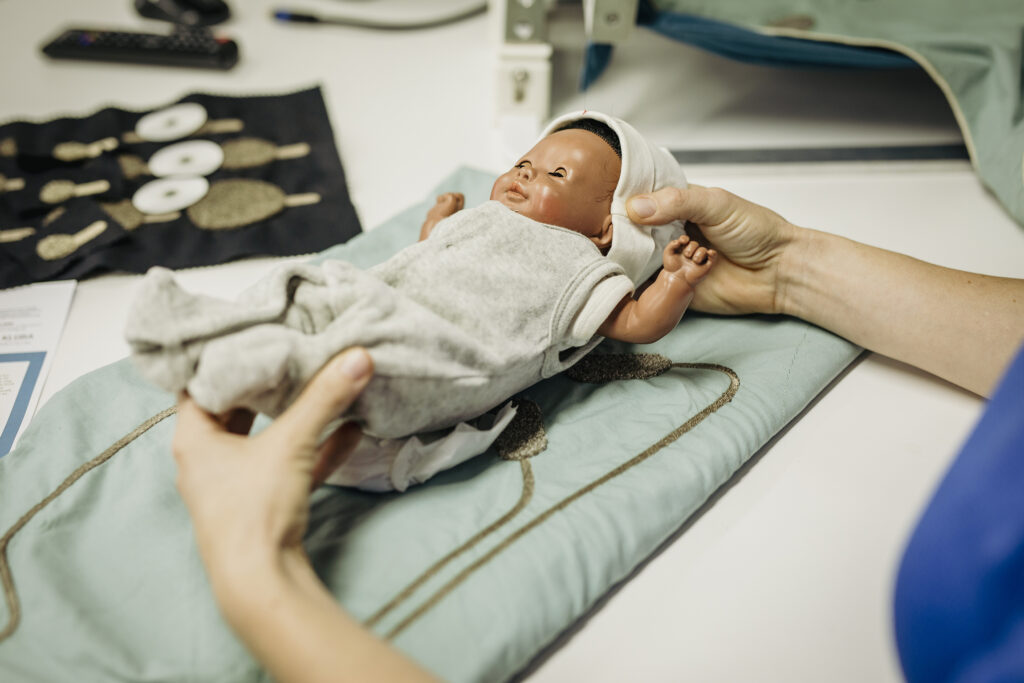
Continuous monitoring for premature infants — without gel electrodes on fragile skin
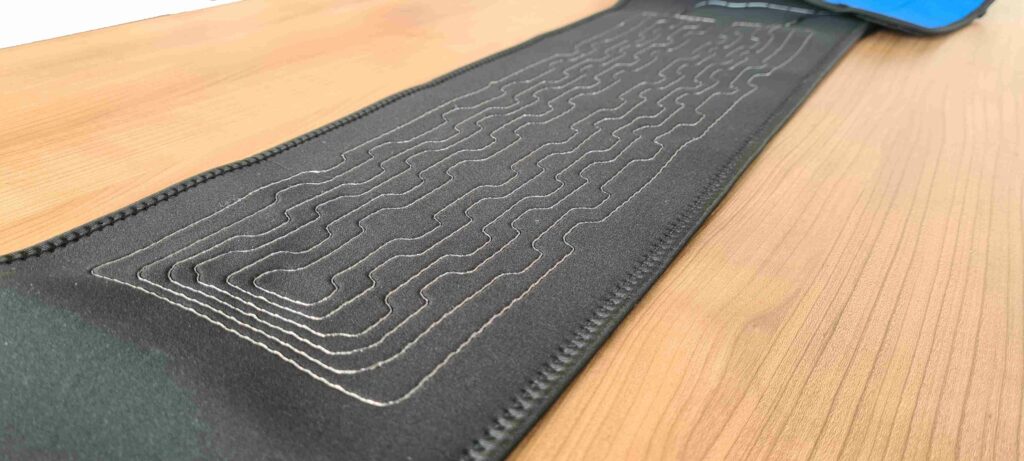
Targeted, drug-free warmth for chronic pain — embroidered into the garment
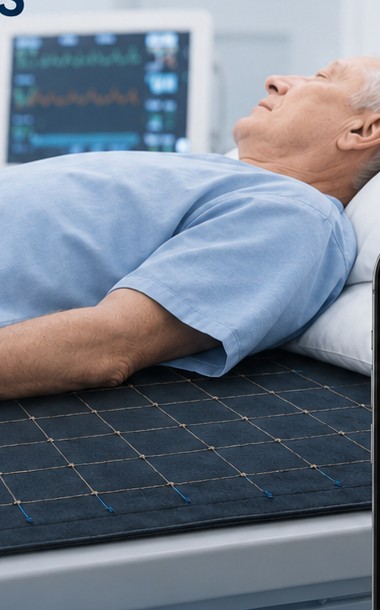
Continuous pressure monitoring — before skin damage occurs
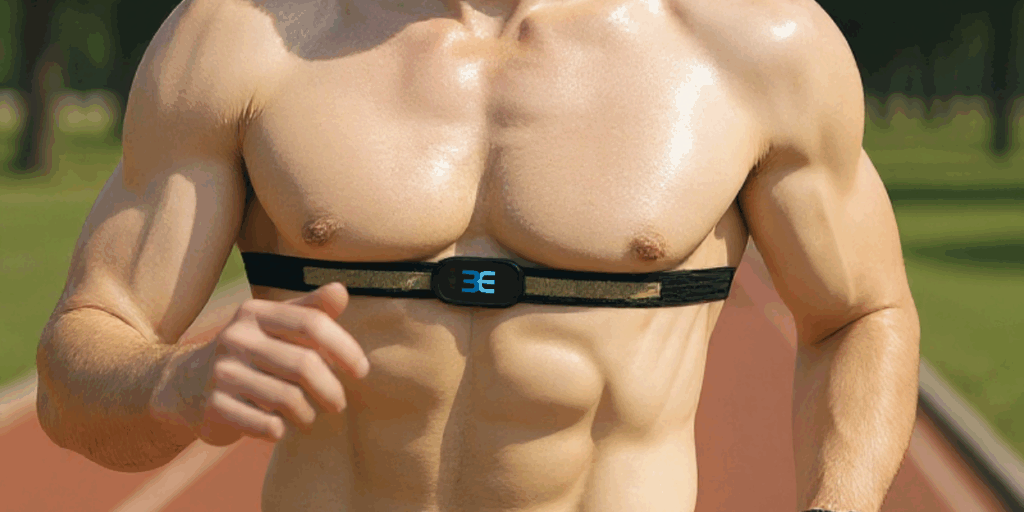
Long-term ECG and multi-parameter monitoring without repeated skin prep
Premature infants need continuous vital monitoring, but adhesive gel electrodes irritate fragile skin and add nursing workload. Our textile electrodes are embroidered directly into the garment, minimising skin irritation and reducing nursing intervention during long-term stays.
Interested in this application? Let’s talk about feasibility and next steps.
Chronic muscle tension, post-operative discomfort, and long-term pain conditions often call for targeted heat therapy — but standalone heating pads are bulky, need constant repositioning, and are separate from the garment a patient already wears. Our embroidered heating elements integrate directly into jackets, belts, and wraps, so warmth becomes part of the textile itself.
Embroidered inductive coils for magnetic field therapy are technically feasible on the same platform. Clinical evidence for magnetic field therapy is mixed — happy to discuss specifics on request.
Embedded tube channels stitched with embroidery offer a route to combine compression or fluid-based therapies with textile sensing — an area we are keeping an eye on rather than actively productising today.
Pressure ulcers are one of the most costly and preventable complications in long-term and bedbound care — but by the time skin damage is visible, prevention has already failed. Embroidered textile pressure sensors integrated into mattress covers, cushions, or positioning aids continuously monitor pressure distribution and flag prolonged loading in time to act.
Interested in this application? Let’s talk about feasibility and next steps.
Long-term cardiac and multi-parameter monitoring usually means repeated gel electrode changes and skin preparation for patients and nursing staff alike. Ambulatory ECG shirts and chest straps enable continuous heart rate monitoring for long-term hospital and home care, while in the ICU, textile electrodes support multi-parameter monitoring without repeated skin preparation.
Interested in this application? Let’s talk about feasibility and next steps.
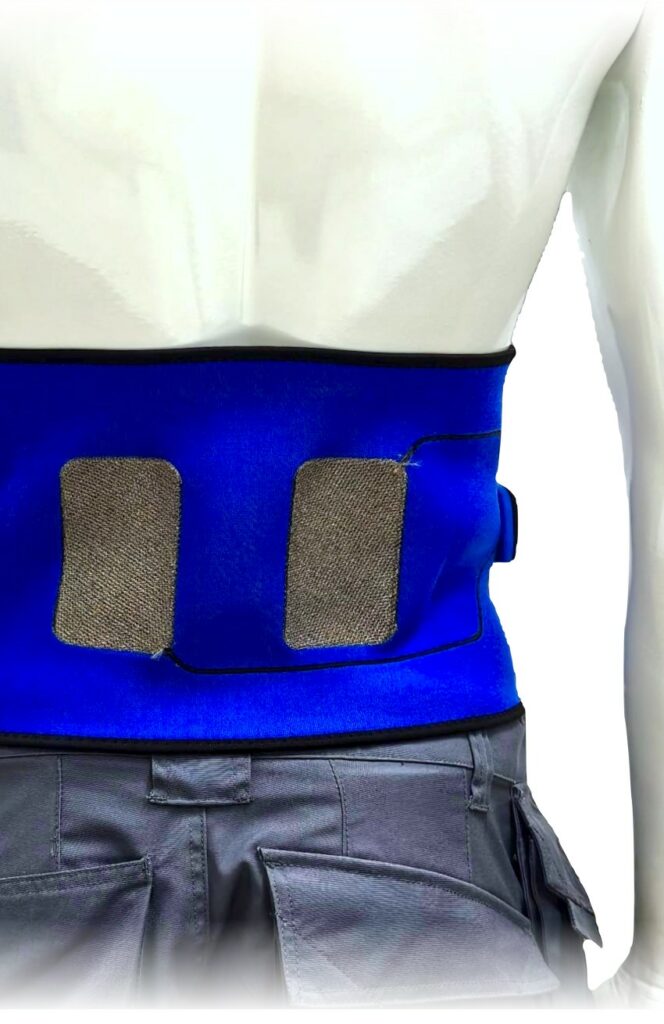
Physiotherapy and EMS devices need precise, repeatable electrode placement patients can wear daily — not single-use gel pads. Smarter EMS cuffs, belts, and full garments for physiotherapy and recovery, built for daily wash-and-wear use throughout a treatment programme, eliminating messy gel pads and complex multi-layer builds.
Download our free PDF guide to explore detailed applications, integration methods, and business benefits of textile-integrated sensors for rehabilitation and EMS therapy devices.
Red and near-infrared light therapy is used clinically to support wound healing, reduce inflammation, and ease chronic pain; blue light phototherapy is standard care for neonatal jaundice. Conventional light-therapy panels are rigid and immobile. Our embroidery platform integrates LED wiring directly into stretchable, conformable textile structures — proven in demonstrator applications, now being explored for therapeutic light delivery.
Interested in exploring light therapy textiles for your application? Let’s talk about feasibility and next steps.
Frequency Specific Microcurrent (FSM) and bioelectric wound-healing approaches use very low-level electrical current — distinct from EMS/TENS muscle stimulation — to support pain relief, reduce inflammation, and encourage tissue repair. These approaches are typically delivered through adhesive gel-pad electrodes. Our MOSS dry electrode platform can deliver the same low-level current through a comfortable, washable textile electrode instead.
Interested in this application? Let’s talk about feasibility and next steps.
Purpose:
Detect force or weight distribution, body contact, posture.
Applications:
Purpose:
Detect touch or proximity to verify correct body posture or form.
Applications:
Purpose:
Measure extension, range of motion, or muscle activation.
Applications:
Purpose:
Sense proximity or changes in body position without direct contact.
Applications:
Purpose:
Deliver localized vibration as real-time tactile feedback.
Applications:
Purpose:
Add thermal feedback or therapeutic support.
Applications:
Purpose:
Provide visual cues about effort, range of motion, or form.
Applications:
Purpose:
Display detailed, real-time metrics and guidance.
Applications:
Whether you need a first working prototype or a production-ready, certifiable design — let’s talk about your application.

